Team Kentucky makes the case for Pre-K For All to workforce board | News
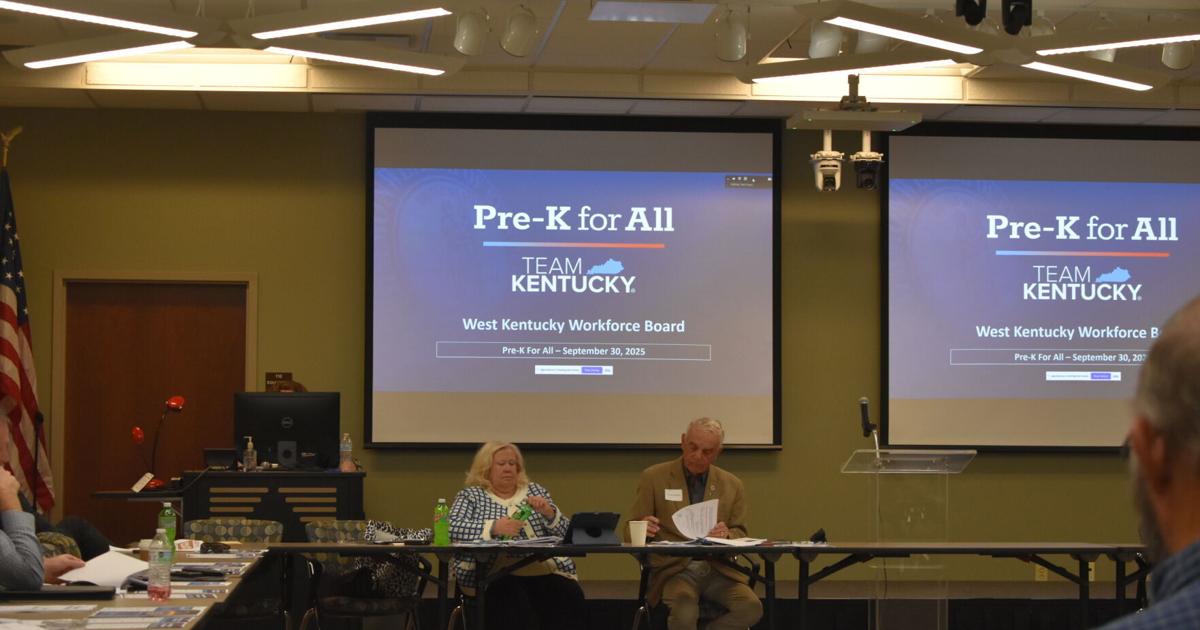
PADUCAH — Sam Flynn, executive director of Team Kentucky’s Pre-K for All Program, made the case for the initiative’s benefits to job growth and stability at the West Kentucky Workforce Board’s Tuesday meeting.
Flynn, who addressed the meeting at West Kentucky Community and Technical College via ZOOM, shared data and anecdotes collected by the program’s advisory committee since its creation by executive order by Gov. Andy Beshear in June. He said the committee of 28 members is made up of experts in education, workforce development, and economic development with diverse political and demographic backgrounds from far western to far eastern Kentucky.

“It creates more jobs, puts more folks back in our labor force, and it creates stability in our workforce, which is something that employers are desperately looking for,” Flynn said of Pre-K For All.
“They went around the state to hear from folks all over the commonwealth about what the challenges are that they’re facing when it comes to early childhood education,” Flynn said. “Whether it was in Morehead or Bowling Green or Northern Kentucky, we heard the same refrain from parents that childcare is too expensive, if you can even find it. In many cases, particularly in the rural parts of the state, childcare is incredibly rare. In more urban and suburban parts of the state, there’s childcare, but families are paying upwards of $10,000, in some cases more than 12% to 13% of their take home pay just on childcare for one child, which is outrageous.”
State-funded preschool has been a policy in Kentucky since 1990, Flynn said, but is only offered in the current system to children with disabilities and those coming from families making a household income under 160% of the federal poverty line. He said that about 27% of children are covered with those guidelines in place, and Team Kentucky’s Pre-K for All Program hopes to expand it to more families. Flynn said, for example, that a single parent making $35,000 a year would not qualify under the current system.


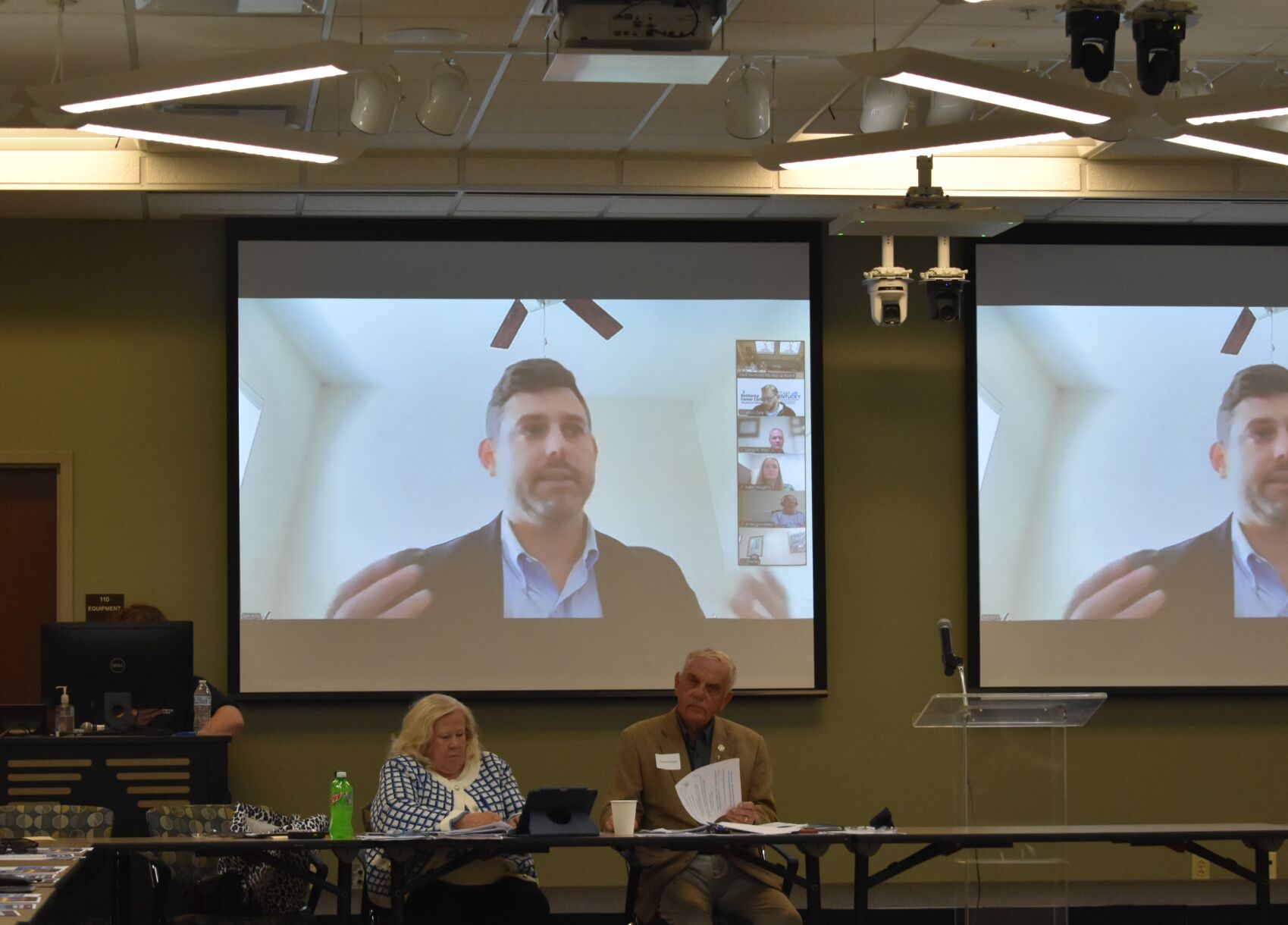
Sam Flynn, Executive Director of Team Kentucky’s Pre-K for All Program, spoke on behalf of the initiative’s advisory committee via ZOOM about the potential benefits of expanded state-funded preschool to the West Kentucky Workforce Board.
Flynn said the committee spoke to educators who stressed the advantages of a preschool education in preparation for kindergarten and as a predictor of success all the way through college enrollment. They also spoke with business representatives to get an idea of the effects a lack of accessibility to childcare has on workplace stability and workforce development. He said that HR managers talked about disruptions to work for childcare issues and employees having to scale back their hours when they have children because they can’t afford the childcare necessary to keep up their current workflow.
It also poses challenges to job competition, according to Flynn.
“We’ve heard about it from a competitive standpoint too,” Flynn said. “We’ve heard from folks in economic development and workforce development talk about what employers that are looking at Kentucky as a potential new home are saying. Generally speaking, they ask three things. What are you doing about infrastructure? What are you doing about housing? And what are you doing about child care and early childhood education? This is an opportunity to address those challenges that we’ve heard across the state.”
Flynn said that there is a direct correlation between expanded preschool access and being able to attract businesses. He referenced a conversation the committee had with Brent Cooper, president and CEO of the Northern Kentucky Chamber of Commerce, about the difficulty of competing with Ohio for new jobs and investments because of Cincinnati’s expansion of preschool education to every child at the age of 4.
“Parents are more likely to work one job instead of two, and have fewer career gaps,” Flynn said. “They’re less likely to switch industries or to work multiple jobs. This creates an opportunity for Mom and Dad to go back to work. It creates more jobs, puts more folks back in our labor force, and it creates stability in our workforce, which is something that employers are desperately looking for.”
Among a bevy of statistics supporting the correlations between preschool attendance and educational, social, and economic benefits, Flynn said that data shows that the expansion of state-funded preschool education would actually save the state money, with a potential 10-to-1 return on investment depending on the setup and funding of the program. Additional cost is counteracted by increased tax revenue from more parents returning to or remaining in the workforce and reduced reliance on other public programs.
Flynn said that the committee is drafting a report of findings and recommendations for preschool expansion that will be released within the next couple of weeks. He said that will be followed by a legislative ask by Gov. Beshear for increased appropriations for the gradual expansion.
“We don’t want to be looking back at this in 20 years saying, ‘We wish we would have,’ like we do with so many things,” Flynn said. “The great news is that we fund this every single year and we have for 35 years. So, we’re just looking for an incremental expansion of what we’re already doing. To do it in a way that provides the most benefit for working families sooner rather than later. We can get people back in the workforce, we can get kids kindergarten-ready, we can help our families, and we can ultimately grow Kentucky.”
link