Mamdani’s child care plan should be model for Democrats

If Democrats and Republicans both care about retaining talent and building a strong American workforce, they will look at what New York is doing with an open mind.
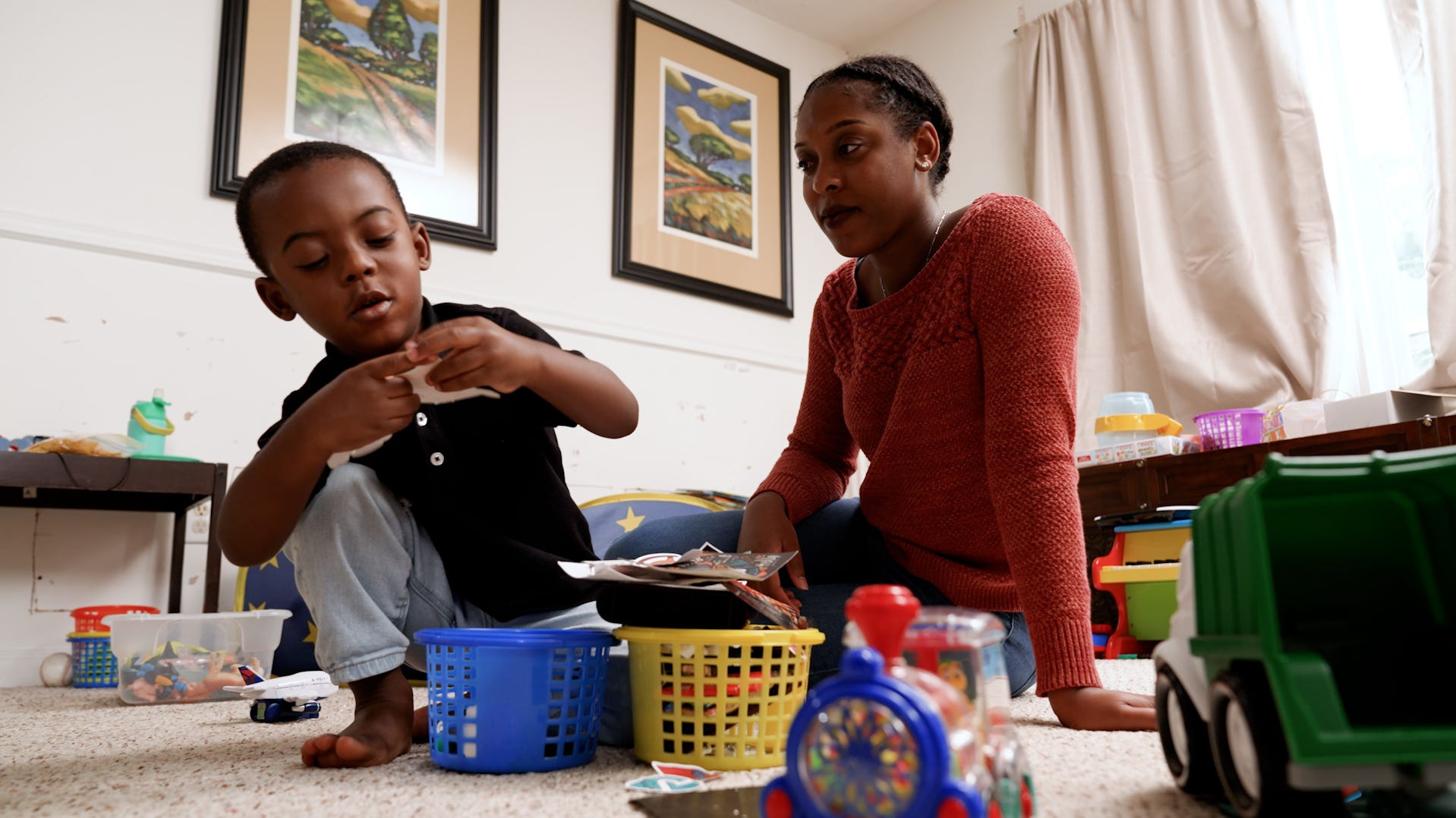

As child care costs soar and offices re-open, women pay the price
Miya Walker, mother of a 3-year-old in Georgia, says child care costs and mandatory returns to the office mean she has become a stay-at-home parent.
When New York City Mayor Zohran Mamdani presented universal childcare as part of his campaign platform, I thought it was a remarkable goal – and a far-fetched one. Now, it seems that dream is closer to reality, and the entire country may be better for it.
On Jan. 8, Mamdani and Gov. Kathy Hochul announced a partnership that would create free universal childcare for 2-year-olds in New York City, alongside the city’s current programs that provide early childhood education to 3- and 4-year-olds.
“This victory represents much more than a triumph of city and state government working in partnership ‒ it is proof that when New Yorkers come together, we can transform the way government serves working families,” Mamdani said in a news release.
I’d argue that it goes even further than making life easier for New Yorkers – if all goes well, this program could cement the city as a guiding light for other metropolitan areas looking to retain talent and keep parents, particularly moms, in the workforce.
Universal childcare is a winning solution for everyone
According to a 2025 report from New York’s state comptroller, childcare costs residents $14,621 annually – more than any other state except Massachusetts. These costs are exacerbated by a decrease in childcare providers that began well before the COVID-19 pandemic. Combine this with the high cost of living in New York City, and the lack of affordable childcare likely plays a role in the city’s dwindling population since 2020.
Using the rule of thumb that a maximum of 7% of a family’s income should be spent on childcare, the city comptroller reports that families would need to make $334,000 a year to afford the cost of care for a 2-year-old in New York. If Mamdani’s plan for universal childcare is implemented, it means workers will be able to remain in New York City instead of moving to the suburbs.
Suri Kasirer, CEO of the city’s top lobbying firm, says this plan would particularly benefit female employees, who often have to choose between staying in the workforce or caring for their children.
“Unless you’re making a significant amount of money, it’s practically a wash,” Kasirer told me on Jan. 15.
To her, universal childcare is a great example of something that benefits both the private and public sectors. She said this isn’t just a win for working families and mothers who seek to remain employed. This is a win for businesses, too.
“As an employer, you want a diversity of workforce, and you want a workforce that’s the best you can get,” Kasirer said. “If a significant number of people are leaving the workforce because they can’t afford childcare, that’s not a good thing.”
She also said this is a good example of all political levels working together to meet a common goal, as it has been hard for previous New York City mayors to accomplish things in the state capital.
“I think it’s a good example of where politics drives policy,” Kasirer said.
Others have noted that the price tag on such a project makes the dream of universal childcare unrealistic. But Kasirer noted that it would actually have a positive economic impact by creating more jobs and making it possible for working parents to fulfill job vacancies in the public sector. It would also mean that families have more available cash flow.
Childcare isn’t just a city problem
The push for universal care for children under 5 years old isn’t just happening in the city. On Jan. 14, Hochul announced a pilot program in three New York counties to see how this could positively impact families in the state.
But in a city where 25% live in poverty, any project that alleviates financial burdens is a godsend to families who want to remain in a place they love.
If the commitment between Mamdani and Hochul succeeds, New York will be setting an example for other states across the country by showing that investment in childcare begets economic growth.
I can’t help but think of how a similar initiative would benefit working families in my home state of North Carolina, which is one of the fastest-growing states in the country thanks to record investment and job creation.
After all, this isn’t just a New York problem. The U.S. Department of Labor reported in 2024 that families spend 8.9% to 16% of their median income on day care for just one child. No matter where you are in the country, this is a cost that affects families.
For women who want to keep working after starting their families, a universal childcare program is life-changing. It would ensure that their children are safe and cared for without the financial costs. If Democrats and Republicans both care about retaining talent and building a strong American workforce, they will look at what New York is doing with an open mind, and consider how Mamdani and Hochul’s new initiative could be beneficial for their own constituencies.
Follow USA TODAY columnist Sara Pequeño on Bluesky: @sarapequeno.bsky.social
link