How Richland County is using technology and education to prevent hot car deaths

MANSFIELD — Kyrie Brown was just 5 years old when he died on June 26 after being left in a hot car.
The little boy is described by family as loving, intelligent, genuine and full of energy — “the best big brother,” wrote his aunt Samaria Holt on the family’s GoFundMe page.
“So attentive and caring. He loved his momma,” Holt wrote. “Everyone that met and knew Kyrie knew he was an amazing little boy.”
Amidst the grief of tragedy, Kyrie’s death sparked something no one ever wanted to need: an initiative designed to prevent it from happening again.
On Friday, Richland Public Health officially launched “Look Before You Lock Richland,” a countywide effort designed to prevent injuries and deaths from children and pets being left unattended in vehicles.
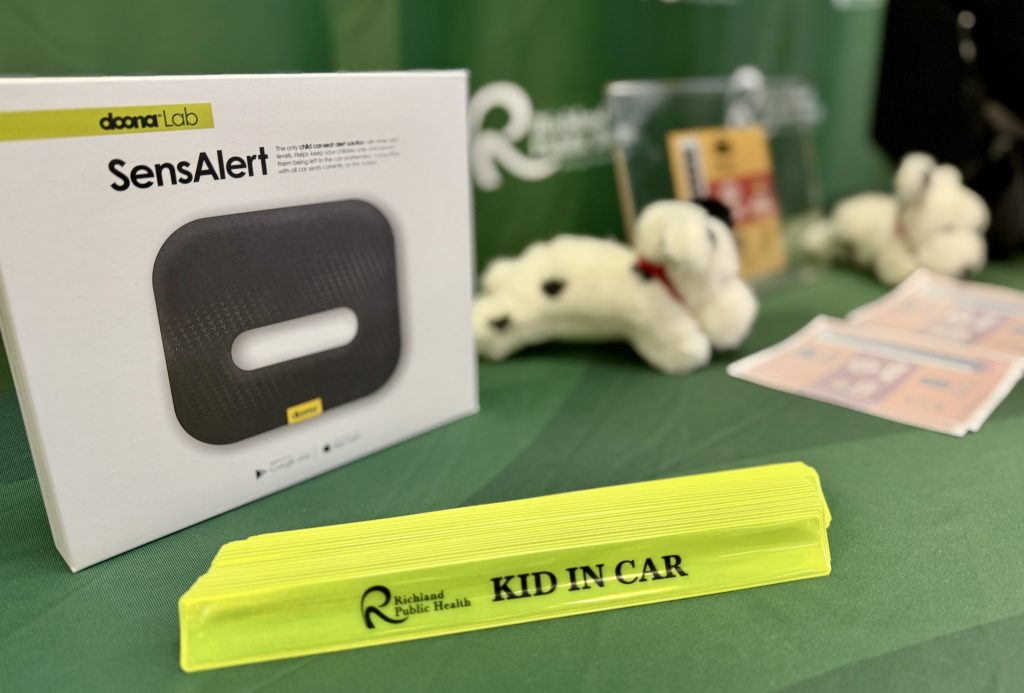
The program offers low-tech visual reminders like window clings and wristbands, as well as a car seat alert pad called SensAlert provided by Doona, a company specializing in infant travel gear and safety products. All are provided for free, and aim to support families on even their most distracted days.
Anyone can receive a SensAlert device by calling Richland Public Health at 419-774-4500 to set up an appointment.
Richland Public Health
“This initiative is about supporting caregivers with real, usable tools no matter their situation,” said Dr. Julie Chaya, health commissioner at Richland Public Health.
“Whether it’s a sensor that connects to your phone or a wristband that reminds you to check the back seat, we want to make safety second nature.”
LOOK BEFORE YOU LOCK offers:
- A smart safety device called the SensAlert that fit into car seats and connect to a caregiver’s phone, sending escalating alerts if a child is left behind.
- Reminder wristbands and other low-tech options that prompt visual and physical reminders for caregivers.
- Education and guidance from Certified Child Passenger Safety Technicians (CPSTs).
- Community outreach and awareness through local partners, clinics, and events.
The program is open to all families with young children, regardless of income or background. Call Richland Public Health at 419-774-4500 to schedule an appointment.
This is the first time Doona has partnered with a local municipality to offer the SensAlert devices in bulk to a community — not just in Ohio, but across the United States.
The partnership came about when Jacob Burke, Doona’s head of sales and business development, was alerted to an order of 100 units being purchased by Richland Public Health.
“My first questions was why?” he said with a laugh. “When I learned it was part of a safety initiative, I told them we’d love to participate.”
The SensAlert is based on an Italian model that became popular after a law was passed in 2019 making anti-abandonment devices mandatory for all drivers transporting children under age 4. According to Burke, Italy saw a dramatic drop in child hot-car deaths after the law took effect.
Burke said public outreach and education is one of the biggest challenges for promoting this kind of safety device.
“One of the biggest difficulties is that everyone believes it cannot happen to them,” he said. “No one is immune to it, especially when it’s a break in routine or you’re already stressed.
“It happens to everyone.”
THE PROBLEM
According to data from Kids and Car Safety, a national nonprofit dedicated to saving the lives of children and pets in and around motor vehicles, an average of 40 children die each year in hot cars in the United States — one every nine days.
At the end of June, Kyrie’s death was one of five that occurred as a result of hot cars over the span of eight days in the United States. The national death toll has climbed to 20 as of Aug. 3.
It happens in minutes. A slight change in routine, a sleeping baby in a rear-facing car seat, or a parent rushing into work can result in forgetting the precious cargo still strapped in the backseat.
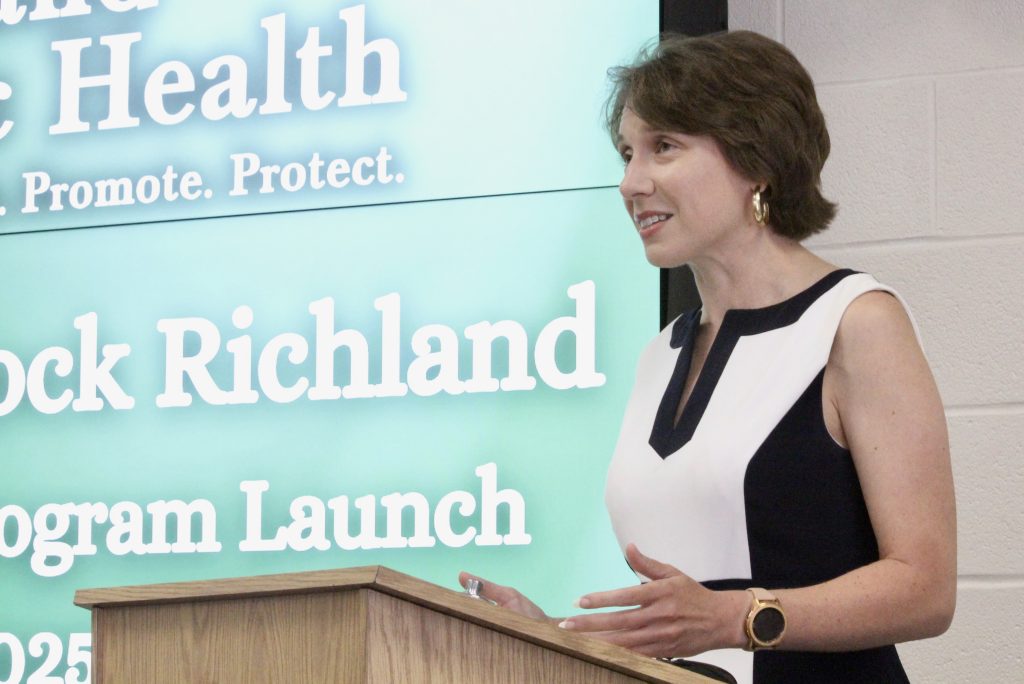
“This can happen to anyone,” Chaya said. “That’s why we’re offering a range of solutions, because every family deserves support, and every child deserves to be safe.”
On a mild 73-degree day, the temperature inside a parked car can hit 100 degrees in under half an hour. For young children, whose bodies overheat up to five times faster than adults, that can quickly turn fatal.
More than 1,050 children have died in hot cars nationwide since 1990, according to Kids and Car Safety, and over 7,300 survived with injuries. Almost 90% of children who die are 3 or younger.
“When this tragedy happened, it was so heavy on my heart and mind,” Chaya said. “I knew we had to do something well beyond just another PSA or Facebook post. We really needed to find a solution for our family of communities here so we’re all taking care of each other.”
THE DOONA DEVICE
The SensAlert consists of a soft, padded sensor that fits inside most car seats and booster seats. When a child is buckled in, the device connects to a caregiver’s smartphone via Bluetooth.
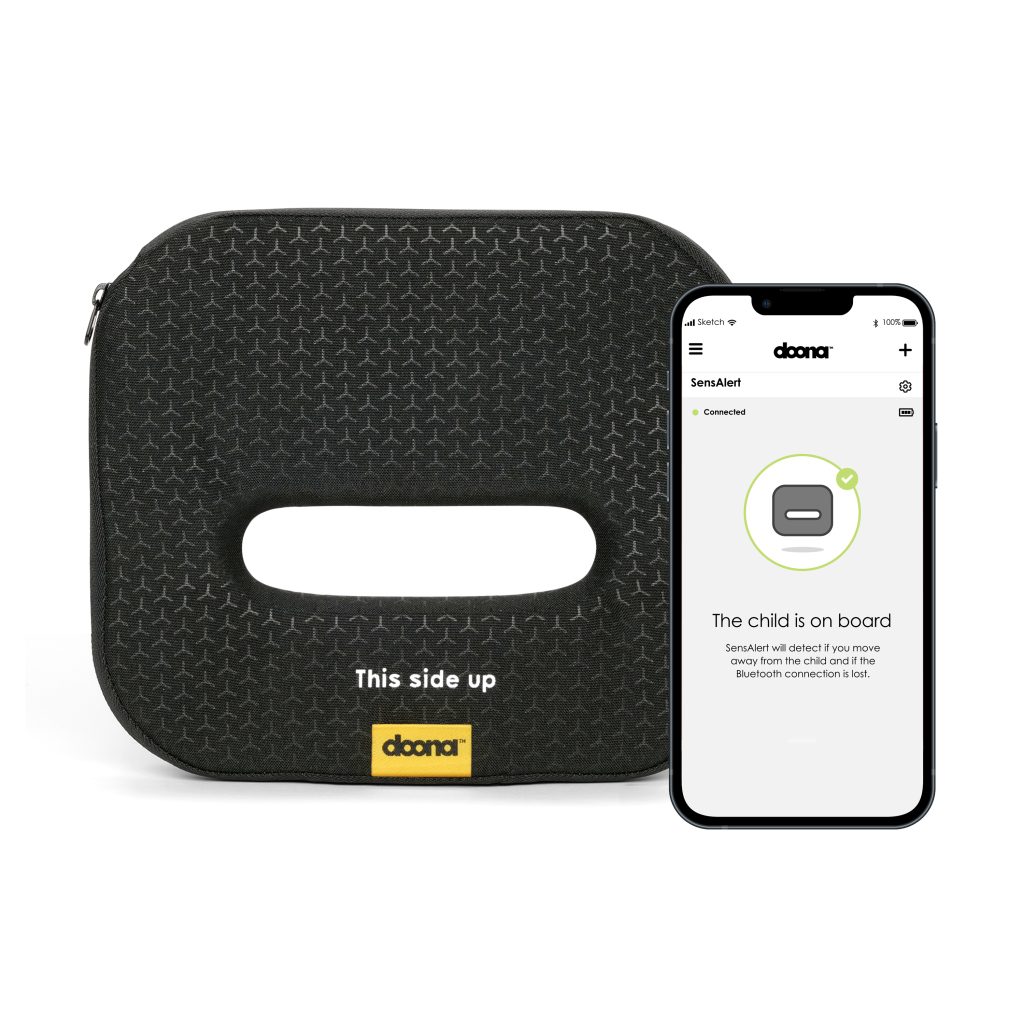
If the driver moves away from the car while the child is still seated, the system initiates a three-stage alert sequence:
- The system’s first alert appears as a simple alert notification from the Doona app on the caregiver’s phone.
- If this first alarm is not deactivated, SensAlert then automatically places a call to the smartphone.
- If the second alarm is not deactivated, the system will both call and send messages (which include location of the vehicle) to up to five pre-defined emergency contacts.
Chaya said she first came across the Doona device during a Google search. She said Richland Public Health selected the SensAlert partly because of its track record in European markets, where car-seat alert devices are more widely adopted.
“I just kept Googling and researching and calling national colleagues to find something we could actually do here to prevent this from happening again,” she said. “Their technology went well above and beyond what any of the other competitors do.”
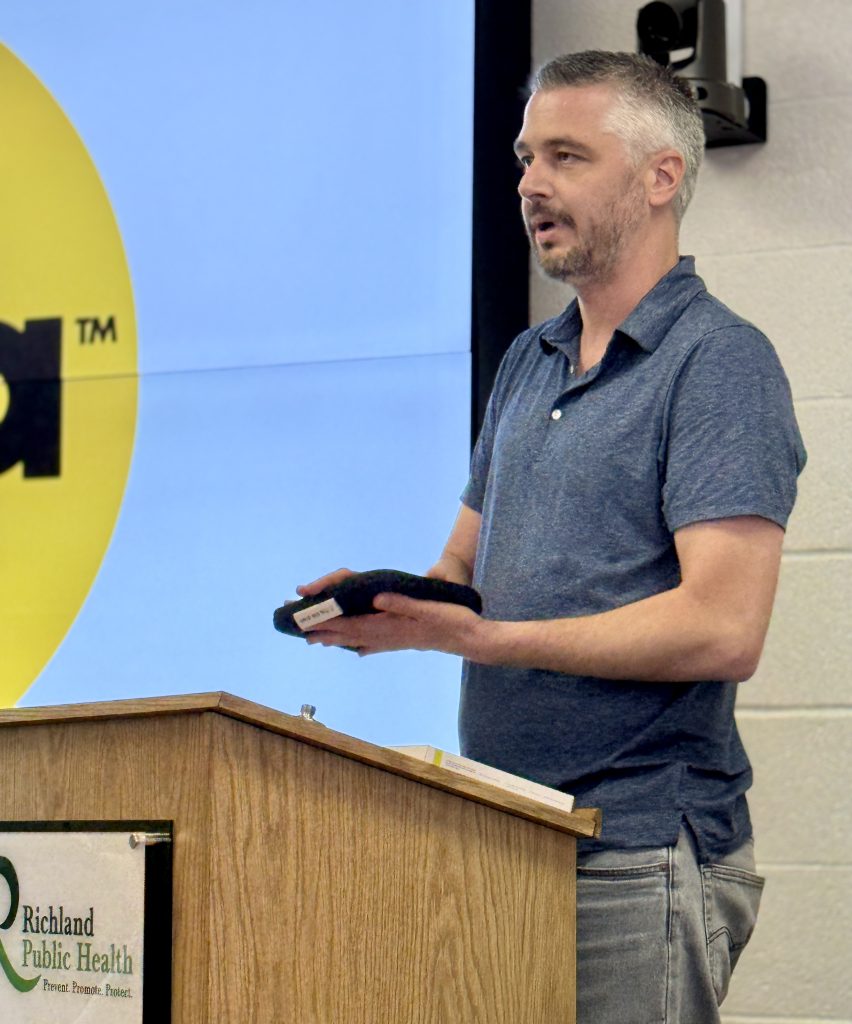
During a demonstration of the device on Friday, Burke explained the pad is activated by measuring the liquid in the child’s body, rather than a pressure-activated system.
“If you throw your gym bag or your purse in the seat, it’s not going to keep going off. You don’t get desensitized to the alerts,” he said.
Anyone can receive a SensAlert device by calling Richland Public Health at 419-774-4500 to set up an appointment. A Certified Child Passenger Safety Technician will walk you through installation of the device in the car seat, as well as the app on your phone.
OTHER RESPONSES
Hot car deaths, specifically those involving children, have been tracked by the National Highway Traffic Safety Administration (NHTSA) since 1998. Since then, more than 1,000 children have died in the U.S. from heatstroke after being left in or gaining access to a vehicle.
The scope of the problem has inspired a range of solutions in the same vein as the SensAlert — some high-tech, some low-tech, and some legislative.
The Evenflo Embrace DLX Infant Car Seat uses a chest-clip sensor connected to a receiver in the vehicle to alert the driver when the car is turned off or if the clip becomes unfastened mid-trip.
Volvo recently unveiled a new seating configuration that allows for an infant car seat to be placed in the front passenger seat, keeping baby in sight at all times.
The 2025 Toyota Sienna has an Advanced Rear Seat Reminder, which uses millimeter-wave radar to detect even micro-movements such as breathing or a heartbeat.
If it senses movement after the driver leaves, it escalates from beeps to horn blasts, text messages, push notifications, and eventually a phone call.
Ohio even enacted a Good Samaritan law in 2016 that protects people who break into a vehicle to rescue a child or pet in immediate danger — provided they call 911 first, verify the vehicle is locked, document the situation, and remain on scene until help arrives.
But while local leaders like Richland Public Health roll out prevention tools, national safety standards remain stuck in limbo.
LIMITATIONS
In 2021, Congress passed the Infrastructure Investment and Jobs Act (IIJA), which requires all new passenger vehicles to include an audio and visual reminder to check the back seat after the engine is turned off. But the law stops short of requiring occupant detection — technology that can sense a child’s presence even if the driver never opened the rear door.
Advocates at Kids and Car Safety say that gap leaves thousands of children at risk, particularly the one in four cases when children climb into vehicles on their own — a situation even the best reminder systems may not prevent.
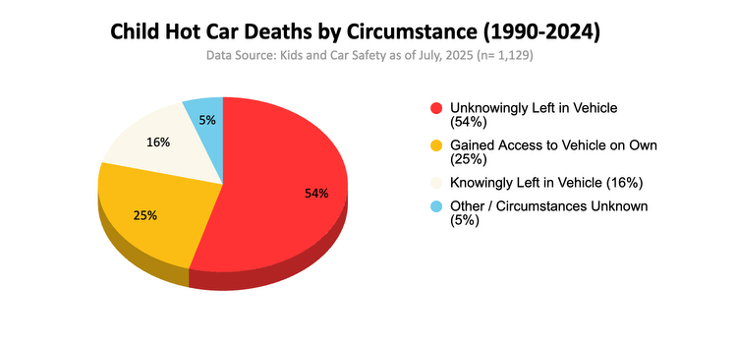
The National Highway Traffic Safety Administration was supposed to finalize the IIJA rules by November 2023. As of August 2025, they have yet to publish even a proposed rule, prompting renewed calls from advocacy groups for action.
Furthermore, only 20 states make it illegal to leave a child unattended in a vehicle, and just five have laws requiring some form of hot car safety technology. Ohio has neither.
The SensAlert goes beyond what the IIJA requires by detecting a child’s presence, not just reminding drivers to look in the back seat — the kind of protection advocates say should be standard nationwide. But it is also not a silver-bullet solution.
Like other anti-abandonment technologies, SensAlert’s real-world impact is difficult to measure; there is no centralized public data proving a direct link between its use and reduced fatalities.
Cost is another barrier — aftermarket devices like SensAlert retail for nearly $100. That’s why Richland Public Health is offering the devices for free, paired with free low-tech reminders and ongoing safety education.
The SensAlert is one approach among many — no device replaces the need for everyday safety habits and awareness.
MOVING FORWARD
As federal regulators debate new rules and automakers test emerging technologies, Richland County is putting tools in caregivers’ hands now.
Whether it’s a smart sensor, a bright wristband, or simply making “check the back seat” second nature, the goal is the same: ensuring no family has to endure what Kyrie’s has.
“I’m somebody that’s no bullshit, so if an issue like this pops up or if it’s a longstanding issue we need to find a solution for, I’m jumping on it,” Chaya said.
“That’s something we strive to do every day at Richland Public Health. And by damn, I’m going to make sure this never happens again.”
Pastor Aaron Williams Jr. of Maddox Memorial Church of God in Christ presided over Kyrie’s funeral on July 9. He said on Friday that taking an extra 20 minutes to install a safety device is worth it to prevent a two-hour funeral service for a child.
“This is not just a tragedy that happened to one family. This is something that affects our whole community,” he said. “We have a responsibility to make sure it never happens again. We have to take action and support each other so no parent has to feel this pain.
“If we truly want to honor Kyrie’s life, we’ll make sure his passing leads to something that saves another child. That’s how we give meaning to a loss like this.”
link