Corpus Christi ISD shares start-of-year early childhood results

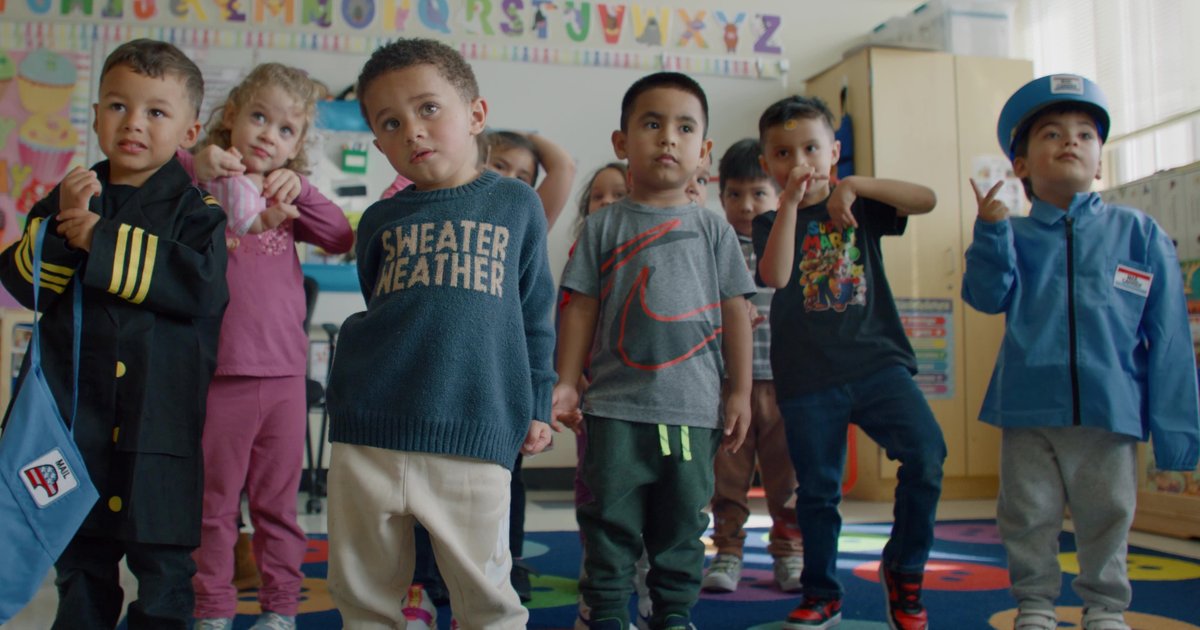
Prekindergarten enrollment at the Corpus Christi Independent School District continues to rise, leaving school officials hopeful that early childhood education efforts are beginning to show dividends in math and reading.
Over the past six years, pre-K enrollment in Corpus Christi ISD has increased by 204%. That amounts to more than 1,700 additional pre-K students.
Corpus Christi ISD Superintendent Roland Hernandez said during an Oct. 6 school board meeting that a study comparing the number of children across town to the enrollments at neighborhood schools conducted several years ago revealed that the district was missing many potential pre-K students.
In the years since then, the district has ramped up pre-K recruitment efforts and added classrooms.
Of the 1,179 current kindergartners who attended CCISD pre-K last year, 45% are already at or above the benchmark in reading, according to beginning-of-the-year testing. In comparison, only 26% of kindergartners who didn’t attend pre-K were at or above the benchmark.
Only about 600 of CCISD’s current kindergartners didn’t attend pre-K last year.
As the school year progresses, the beginning-of-the-year results will be compared to results at the middle of the year and end of the year to determine growth.
Last year, 42% of Corpus Christi ISD kindergarten, first grade and second grade students scored at or above reading benchmarks at the beginning of the year. By the end of 2024-25, 64% met or exceeded reading benchmarks, according to mCLASS results. The educational assessment is used for progress monitoring over the course of the year.
This fall, 43% of kindergarten through second grade students were at or above reading benchmarks, according to beginning-of-the-year mCLASS data. Second grade showed the best beginning-of-the-year reading results, with nearly half scoring at or above grade level.
“The trend this year suggests that we are on track to exceed last year’s results,” elementary reading and language arts specialist Brooke Coplin said.
Coplin said that explicit and systematic phonics instruction has contributed to the district’s results. Phonics is a method for teaching reading that relates letters to sounds.
“Our early childhood teachers are working with focus and dedication to ensure students build the foundational skills needed to decode words and become fluent readers,” Coplin said.
Other strategies for early literacy include a focus on productive struggle, which is a strategy that allows students space to think, work through challenges and build confidence, as well as providing quality libraries.
In math, 42% of second graders scored at or above for the beginning of 2025-26, compared to 29% for kindergarten and first grade students.
Students begin with hands-on learning and move to abstract problem-solving.
Coursework includes daily number fluency activities.
The beginning-of-the-year data is also used to group students for targeted small group instruction. Groups are adjusted throughout the year based on progress monitoring.
“Teachers have been trained to use this data to guide instruction, accelerate learning and close achievement gaps, ensuring students receive the targeted support they need,” elementary math specialist Victoria Ybarra said.
link