Back-to-School Prep Is Easy as ABC

By Michelle Smith Howard
President & CEO, Kids’ First Years
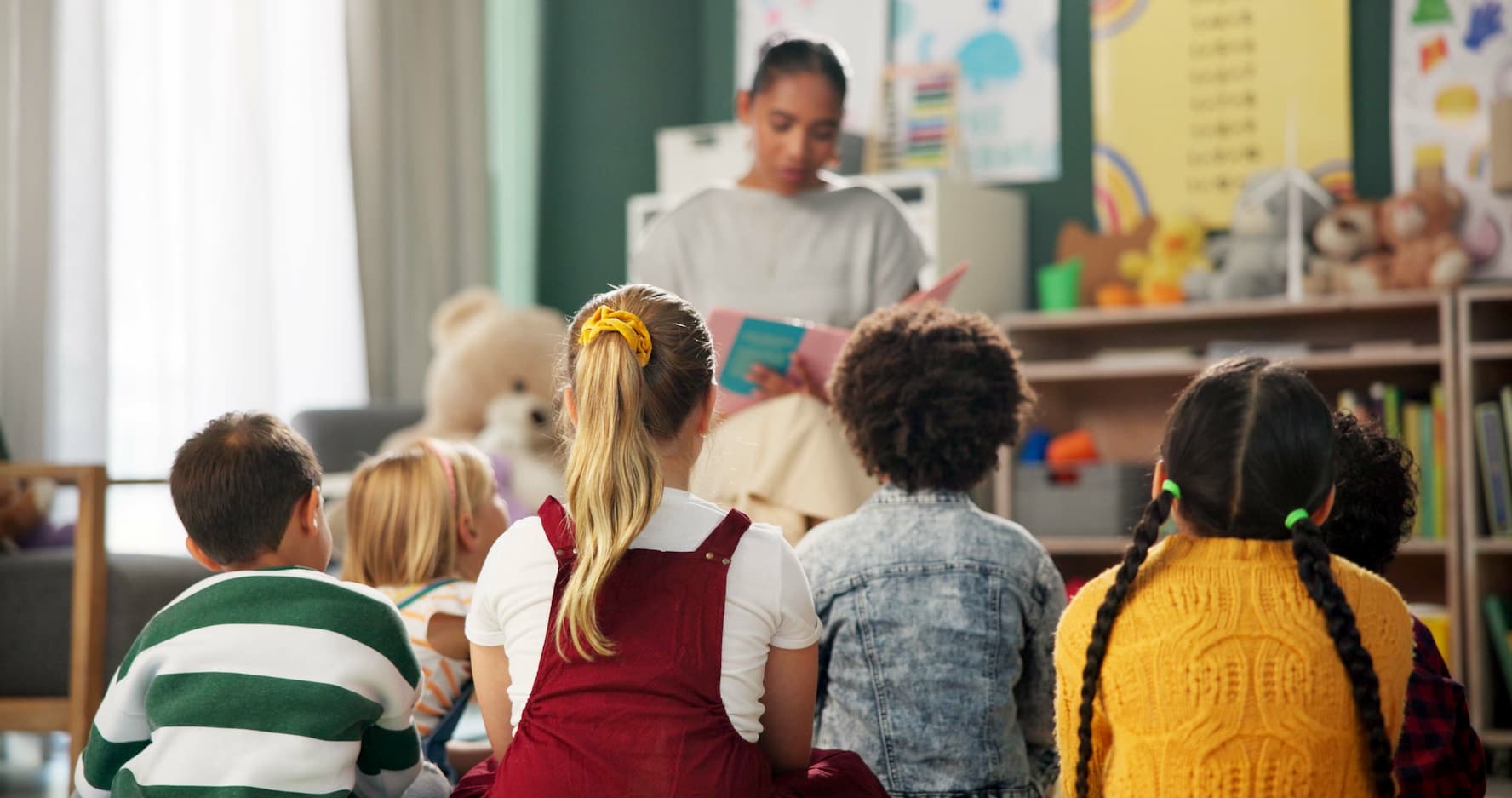
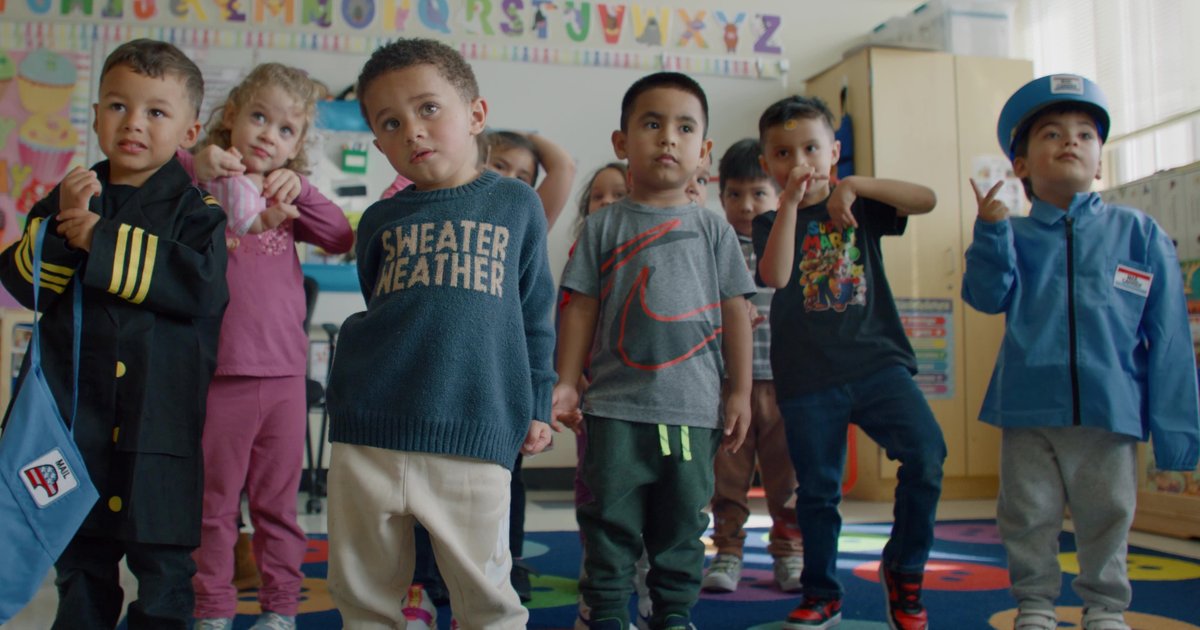
Alexandria, VA – Many families in Alexandria are busy preparing their young children to enter kindergarten or to start preschool after the summer break. But there is much more to being ready for school than walking into the classroom wearing new shoes or toting a new backpack. Social, emotional and independence skills are the most important skills that teachers want students to have when starting kindergarten.
Kids’ First Years, a partnership of people and organizations working together to support opportunities and learning experiences for young children, asked Heidi Haggerty, principal of the Early Childhood Center, a Pre-K school that is part of Alexandria City Public Schools (ACPS), to share some school-prep tips to help kids put their best foot forward. Her suggestions include:
- More play time, less screen time – Children need to be able to sustain their attention span in a room without screens, so have them play outside with other kids and toys instead of sitting in front of a screen.
- Set a consistent routine – At least two weeks before school starts, get kids back in the routine of going to bed and waking up on a school schedule. This helps them make a smoother transition when the daily school schedule is underway.
- Foster independence – Have your child practice simple tasks such as opening food containers and milk cartons or putting a straw into a juice box. This builds confidence that they will bring to their learning.
- Keep clothing easy to manage – Overalls might look cute, but the straps, clasps and buttons can be challenging for little fingers to manipulate. Pants with elastic waists are perfect—no snaps or belts required. Many preschoolers and kindergartners are not experts at tying laces yet. Shoes with Velcro closures keep your child from needing help from the teacher.
- Plan for the separation – Some children might have a hard time parting from a parent on the first day of school and many parents struggle with separation anxiety as well. The key is to hand them off quickly, and to prepare them in advance for what will happen on the big day: “We’ll go to school. We’ll see your teacher and then I’ll leave. You’ll have a great time learning new things and I’ll see you when school is over.”
“We recommend that families should not plan any major transitions for the first month of school,” added Haggerty. “Starting kindergarten is a big shift for young children and it really tires them out, more than you might realize.” As a reminder, kindergarten students do not have nap time, which often comes as a surprise to parents. Decreasing nap time at home in the days leading up to the start of school can help prepare kids for a busy day at kindergarten.
Haggerty also advises parents to take advantage of any activities that schools offer to help with the transition, noting that ACPS will host a half-day orientation called Step Up to Kindergarten for incoming students. This introduction to the school experience in advance of the actual school year start-date helps incoming kindergarten students become familiar with their school, classroom and teacher so that they can feel more comfortable on the first day of school. Information will be sent from the school about the date and time of the half-day orientation.
Kids’ First Years encourages parents to support teachers by providing consistent routines at home along with communication between home and school. When families and schools and communities join forces in Alexandria, we can ensure that all young children will have the strong start to the school year that they deserve.
To connect with Kids’ First Years or its partners, visit kidsfirstyears.org.
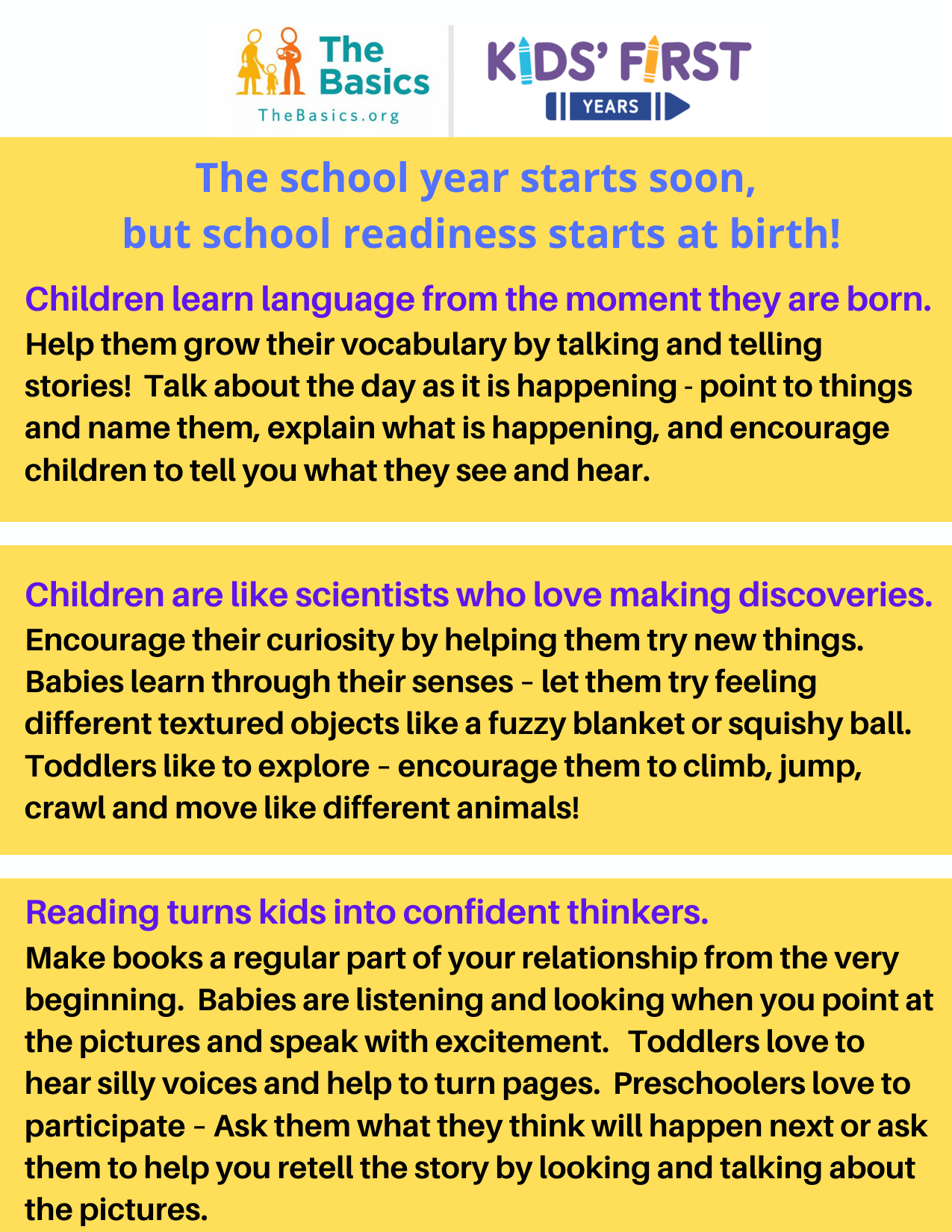
Suggested Books to Prepare for Kindergarten or Preschool
“Kindergarten, Here I Come!” by D.J. Steinberg
“Benny the Brave in The First Day Jitters” by Julie Anne Penn
“The Night Before Kindergarten” by Natasha Wing
“On the First Day of Kindergarten” by Tish Rabe
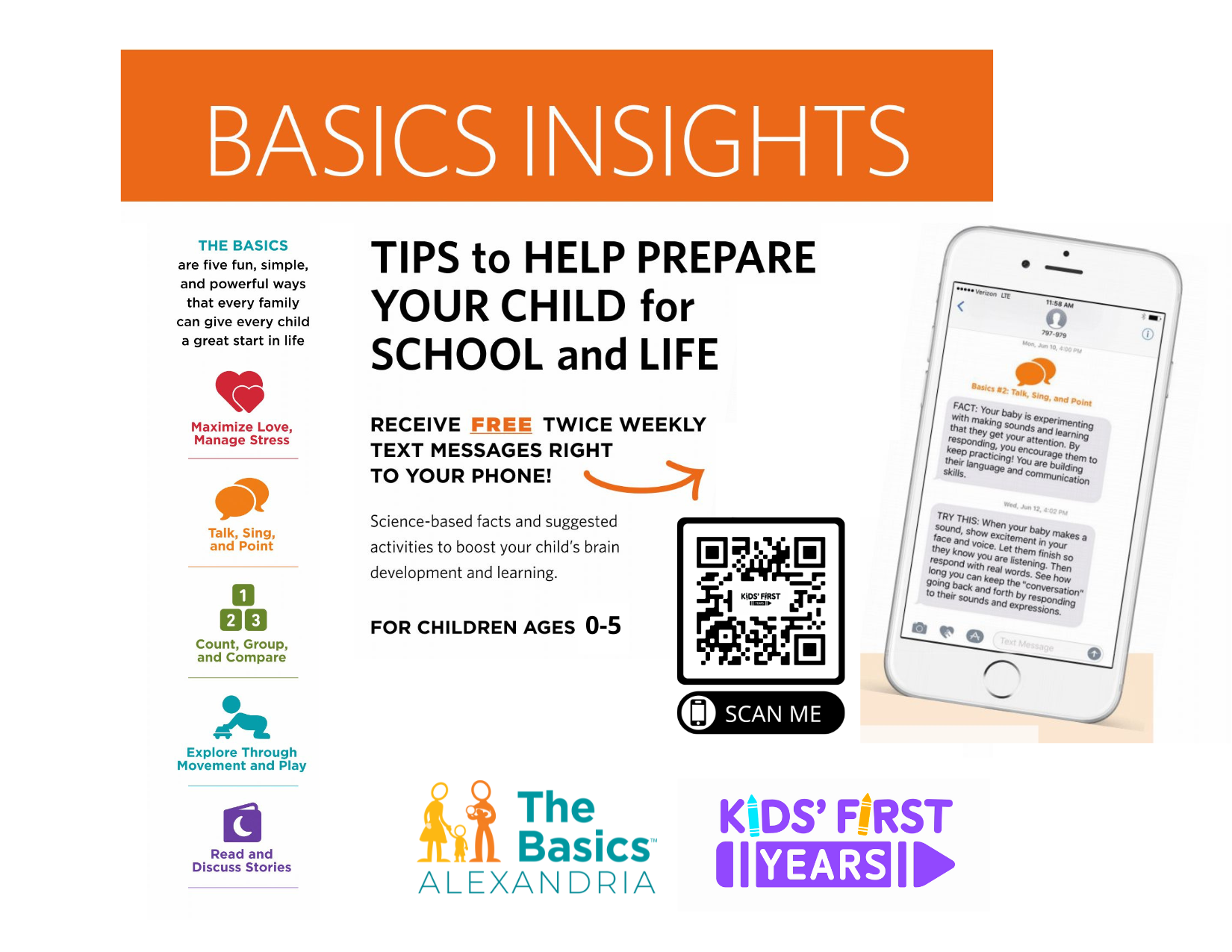
Kindergarten-Prep Activities from The Basics
- Find and plan occasions for your child to spend time with other children. Help your child with activities that involve sharing and taking turns. Praise your child and show how happy it makes you when he/she plays nicely with others.
- Play freeze games like “Red Light, Green Light.” Games that involve moving and then freezing in place upon command help teach listening skills and self-control.
- When you are running errands with your child, look for the letters in your child’s name on store signs, street signs or billboards. See how many different places your child can find the letters.
Post Views: 27
link