California Education Officials Take Aim at Student Achievement Gap

In a statement, she said AB 2514 would bring about “transparency and alignment, so the state is working alongside our school districts, not simply asking them to solve this challenge on their own.”
Before the COVID-19 pandemic, which shuttered schools and disrupted learning, just over half of students were considered proficient or exceeding progress standards in English language arts based on annual state testing, while about 39.7% of students met or exceeded progress standards in math. Those numbers dropped after school closures and distance learning, to about 47% and 33.4% during the 2021-22 school year, respectively.
Over the last few years, student test rates have started to rebound slightly, but still lag behind pre-pandemic levels.
Experts are also concerned about long-term, and in some cases, widening gaps between the state’s highest and lowest performing students.
English language arts proficiency among Black students was 32.75% last year, compared to 48.82% overall. In Math, scores lagged about 17.24 percentage points behind overall scores, with 20.06% of students at or exceeding grade level standards.
Among Latino students, English and math figures were 38.8% and 25.74%, respectively, while Asian students, who performed the highest, recorded 74.36% and 70% proficiency.
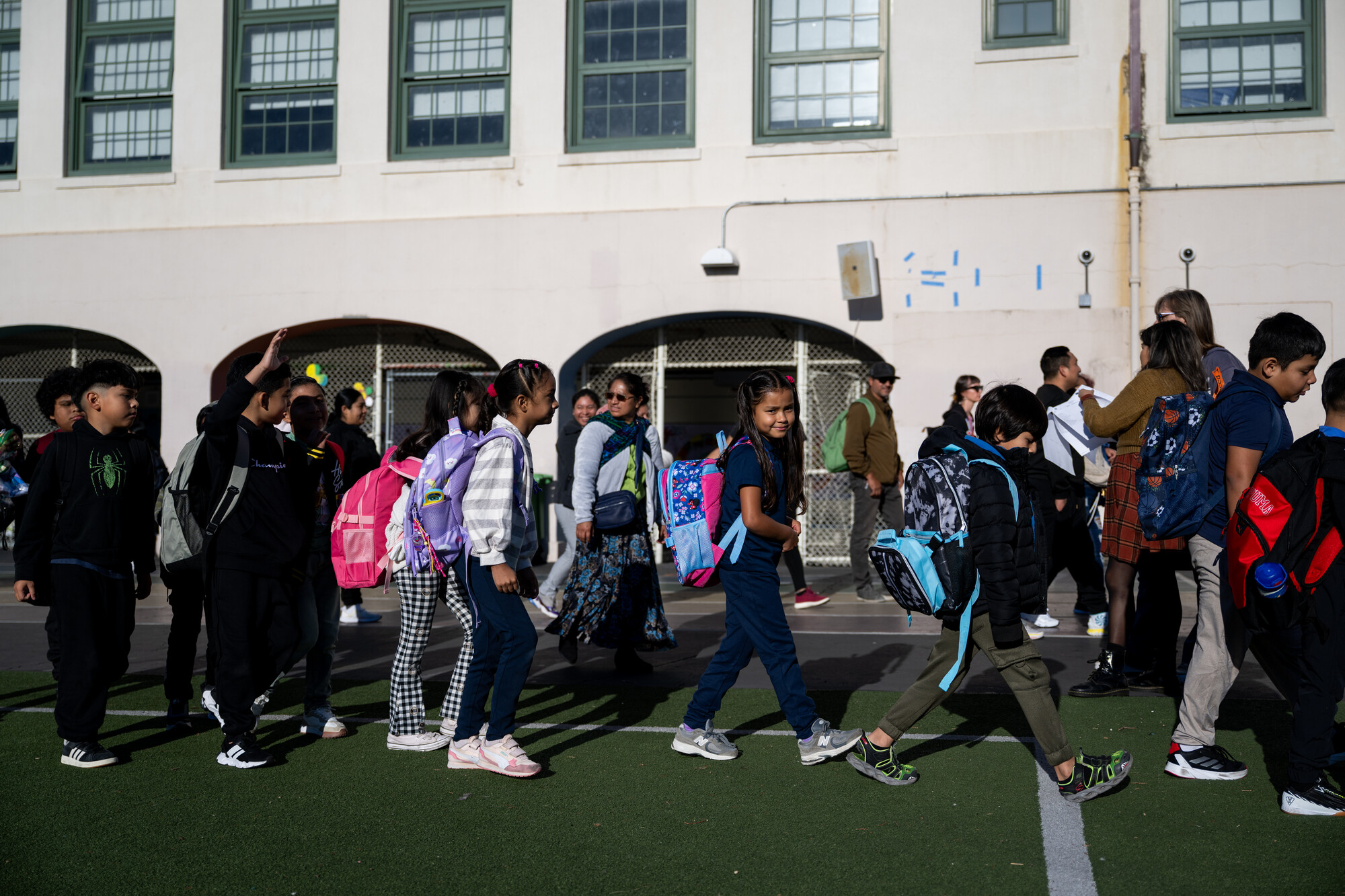
Socioeconomically disadvantaged students also had about 10% lower proficiency rates in both subjects. Foster youth had a larger gap: just 22.46% were at or above grade level in English language arts, while 13.17% met or exceeded math standards. Slightly more than 10% of English language learning students met or exceeded English and math expectations.
Flint said more affluent urban and suburban school districts also see higher achievement levels than rural areas.
The campaign to improve state oversight, Flint said, is about lifting overall student performance.
“The only way you’re going to do that really anywhere, but especially in a state with California’s demographics, is by targeting the achievement gap,” Flint told KQED. “We’re taking a broad perspective on this about how we can provide universally high education that reaches across all barriers and boundaries to support students … It’s about every student group that we can identify that’s struggling and uplifting them.”
link